
Are you unsure what value copywriting can add to your business?
I don’t blame you.

‘Copywriter’ sounds almost Shakespearean – we just don’t use the term ‘copy’ in our day-to-day language.
If you’re questioning whether quality copywriting can benefit your business, ponder on this…
73% of people admit to skimming rather than reading your marketing writing.
Readers are getting more impatient and less trusting.😬
How are you going to make sure your customers read your key messages and buy your service or product?
Well, with great copywriting of course.
No time to dig deeper? Subscribe to get a special offer on my writing services. Posts, website, emails or adverts – no project is too small or big. I’d love to help!
Want to learn more first?
Okay, let’s explore what copywriting is.
What is copywriting?
Copywriting is the process of writing marketing materials that persuade people to take action.
Copy is the written product.
Here’s an example:

A business has a new product – a gold pendant necklace. They want customers to buy the product, of course. So, the copy has to persuade the customers to take that action. It might be written a little bit like this…
Introducing Venus – a delicate gold chain with a hand-etched symbol of feminine strength. Empower your inner goddess today.
So… are you tempted to take a look at this necklace? Yes? My work here is done!
Not quite. We need to dig a bit deeper to see the full value and scope of copywriting for your business.
What does a copywriter do?
Now you know that a copywriter’s main job is to inspire some kind of action from the reader or customer, you might be starting to see their purpose more clearly.
Certainly, good copywriters can convert traffic on your website or social media into sales with just a few words! More on what to look out for in a great copywriter later.
But what do copywriters do?
The process looks like this:
1. Outline
Creating an outline or brief is essential to give the piece of writing a clear aim, all the way through. Your outline could include: target audience, tone, call to action, must-haves/things to avoid and so on.
Copywriters usually gather this information through their first meeting with a client but sometimes a client readily provides a written brief to work from.
2. Research
This might be sifting through information on the internet and using the most trustworthy sources.
It could be interviewing the target audience to find out their wants and needs.
It could even involve immersion in the ‘world’ of that brand, experiencing services and testing products to get first-hand evidence.
Any useful and interesting information that will encourage action – gather at this point.
At this stage you might also research your keywords for SEO.
3. Planning
Emerge from the rabbit hole of research… this stage is all about giving your writing structure. Using headings, keywords and notes to create the form of your copy helps to establish flow from the very beginning. Yes, it might all change as you start writing, but at least you don’t have a blank page staring at you anymore.
4. Drafting
Write the copy! And don’t stop until you finish (toilet break permitted).
It’s usually best to just get everything down and sound more conversational than sweating for ages over a word or sentence. Often, spending more time on something at this stage will make it sound stuffy and it’ll get deleted anyway.
5. Editing
The most important part.
Polish and preen.
Kill your darlings, get rid of useless phrases and make use of a thesaurus for concise writing.
Read it out loud – does it sound natural?
Always write with the ear, not the eye. You should hear every sentence you write as if it was being read aloud or spoken.
C. S. Lewis
Types of copywriting
Sometimes, copy can be one line and sometimes it can be a whole web page. Here are the main copywriting categories.
Digital copywriting
Digital copywriting is any writing, with a call to action, that is accessible online by audiences. For example:
- Product web pages
- Social media posts
- Email campaigns
- Articles and blogs
Technical copywriting
This form of copywriting requires expertise in a subject field or a great deal of research. It includes:
- Case studies
- User manuals
- Reports
- Proposals and bids
SEO copywriting
It bugs me a bit when SEO is given its own category as every digital piece of writing should be written with SEO in mind.
SEO means search engine optimisation. There are many ways that pieces of writing can be optimised to rank highly in Google searches and Google’s EEAT guidelines support copywriters to achieve as wide an audience as possible. We’ll cover SEO in more detail in a future blog.
Creative copywriting
This term usually refers to the advertising world – tag lines, headlines, sales pages and advertisements. It also includes physical copy such as product packaging writing and printed advertisements.
Tips for writing your business copy
Naturally, there’s lots of advice out there for how you should be writing your business content.

First and foremost, if you’re writing your own copy for your business, BE YOUR BRAND. And that doesn’t always mean being yourself, I’m afraid.
You must write for your customers, not you. They’re the ones that are paying you at the end of the day.
Here are some more general tips:
- Try to trigger an emotional response or thought process
- Avoid ‘clickbait’. Don’t say ‘World’s best [product] to cure all your problems’ if you’re not going to follow through on your promise
- Be concise, not wordy
- Use a consistent tone across all your business marketing – whether that’s playful, informative, sweary, serious or nurturing. Match it to your business.
2 min exercise
Think about a new product, service or campaign in your business. For example, it could be that you have a Halloween event coming up or a new beauty treatment launch.
Now think of your audience.
❓What emotion do you want them to feel when they hear about your new launch?
❓Can you give it a word? A phrase? A sentence?
You’ve just started the process of writing good copy.
🤔Did you find it straightforward to summarise your brand tone?
🤔Was thinking of an emotional sentence relatively easy?
For some business owners, there’s just no time in the day to produce a high standard of writing for their brand.
Copywriters help you establish a consistent tone of voice across your content. When you are so close to your brand, it helps to have an outside perspective and a clear understanding of your target audience.
You now know what copywriting is, the process involved and you’ve even tried out some copywriting of your own.
Let’s take a look at an example. Here’s one I made earlier…
Copywriting example
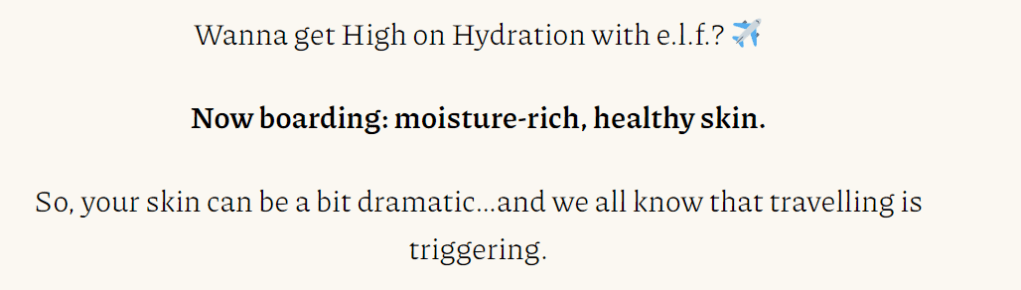
✔️A playful, understanding tone that empathises with common worries builds trust with the consumer.
✔️Powerful words such as ‘moisture-rich’ and ‘healthy’ trigger positive associations with the product.
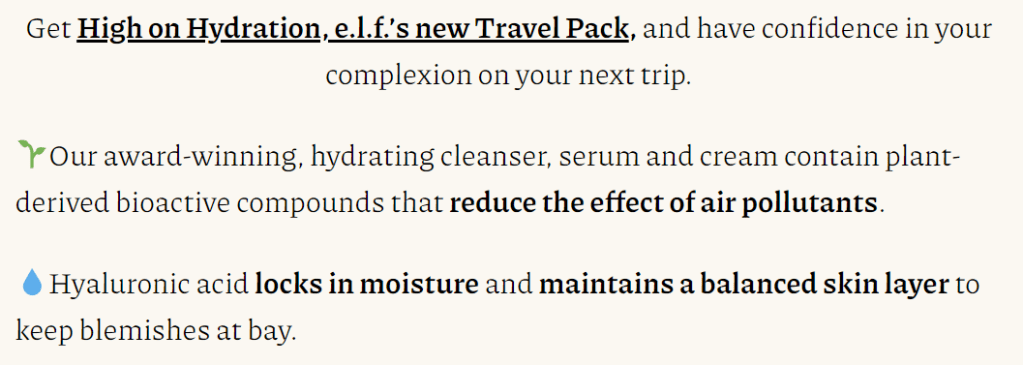
✔️Scannable content with emoji bullet points appeals to impatient readers and draws their eyes to the benefits. If that’s all they look at – so be it! It’s enough to persuade them that this product will satisfy their needs.
For more examples and an insight into my thought processes, find my portfolio here.
If you’ve made it this far – thank you and well done!
You’ve probably made up your mind by now about whether you are going to tackle your own business copywriting or look for a copywriter to help with certain projects. The following list will help if you do decide to work with a copywriter in the future!
What to look for in a copywriter
✍️Writing skills
No surprises there. Take a look at their portfolio. Are you impressed by their writing? Is it concise, well organised and accurate? Remember, it might not sound like the tone you are looking for but copywriters can adapt to any tone required.
📘Research skills
In your initial conversation with a copywriter, it’s a good idea to ask about their research experience, especially if you will need them to do a deep dive or have specific requirements such as being able to interview customers.
💬Good communication
Most importantly a good listener and reflective in the face of feedback. You don’t want to waste time repeating your guidelines and you don’t want someone who gets ratty when you mention that you’d like to make an edit.
🎨Creativity
A good copywriter will be brimming with ideas that will boost your business. It’s up to you how much free reign you give them but if they’re good at what they do, they’ll want to be unique and go above and beyond to develop something special for you.
📃Editing skills
Most copywriters accept that editing is part of the package. Of course, if by ‘editing’ you are requesting a whole rewrite and more, things may get a little tense. Copywriters will happily change wording and remove/add sections if requested and this should always enhance the overall message.
💕Empathy
Can your copywriter put across in words what it’s like to be human? Read some of their previous work – does it relate and make you feel something? Great copywriters are empaths and use their understanding of emotions to call readers to action.
Thanks for reading today.
That’s all for now!
As always, I’d love to hear your key takeaways and thoughts. Comment and like below!
Next week we’re exploring content writing, which has been steadily growing in popularity with businesses – for good reason!
 Hayley Hickmott-Maurice | Copywriting Services
Leave a comment